Table of Content
This is a great option, providing protection for your panels along with the ability to really customize your creation. Make it match the room, mimic real rock, or paint a mural… It’s your call. You do want to select something highly durable, we recommend using an epoxy paint with a primer base if you really want it to last.
These elements will not only make your wall more challenging, but they’ll also add some visual interest. Also, ensure that any exposed screw heads are covered with chicken wire to prevent injury. WikiHow is a “wiki,” similar to Wikipedia, which means that many of our articles are co-written by multiple authors.
How to Build a Climbing Wall
If you decide to relocate the grips after they have rusted, you may find it difficult to detach them. It is a good idea to paint liquid tape on bolts to keep them from rusting. If you decide that you want to change the location of the grips after they have corroded, it may be difficult to unscrew them. If you go to the climbing gyms in your area, you can also locate holds for a reasonable price. In many cases, they are willing to offer at a price that is far lower than the market value. Determine exactly what you want to achieve with your rock climbing wall.

The odds of one failing are low, but both failing simultaneously is very, very low. Using two adequately rated screws is safer than using one really big one for this reason. One screw can hit a knot or void, using two screws increases the probability of making a solid connection dramatically. If this is a campus or training board and you are using a high-grade plywood, the raw wood finish is an excellent way to go. Simple and easy on the fingers, this is the preferred choice of many serious climbers. Just make sure all the corners and edges are nicely sanded and rounded out.
Follow This Old House online:
If so, make sure you can still easily access them if you need to. Point is, the basic materials and time spent aren’t the only project expenses. So, consider all factors before making the final call – a ready-to-go, bespoke wall, or a DIY one. Use the appropriate installation method for the type of hold you’re using as well as the correct route-setting technique to position the routes properly.

That is of course if they actually throw away their offcuts, as foam is very, very expensive. Using at least 10 gauge wood-screws that are twice the thickness of your plywood or more, attach your plywood to your frame from the bottom up. Screw density should be approximately every 20 cm or more along the outside edge of the plywood and along any internal studs. If you will be texturing or painting your wall, you can do this first and paint every sheet of plywood you think you will need. If you use 17mm plywood it is also possible to paint the wall as the last step. If you use a roller to paint the wall, it is unlikely you will get paint in the t-nut threads if you are careful.
Why build a climbing wall?
Cut the beams to size and place them inside your frame, using a nail gun or hammer to set them in place. Cut 2 in × 4 in (5.1 cm × 10.2 cm) boards to your wall’s desired height and width. Cut the longest boards first before working on the shorter boards. Always double-check your measurements before making the final cut in your wood. Elevated Adventurer is your go-to sherpa for all things adventure sports and outdoor exploration. Here you’ll learn everything you need to know about your favorite outdoor sports from rock climbing and scuba to skydiving and extreme sports.
It is worth taking some time to consider how you want to finish it. The most common head style is called a socket head cap screw. These are the cheapest, most effective option for most applications. You will occasionally run across a hold that is countersunk, requiring a tapered head, but these are rare. You will need to check the hold you plan to use to verify this and make sure you have the proper bolts. Concrete walls are super solid and make great supports for a home climbing wall, but they are a little harder to work with.
STAGE TWO: PHYSICAL PREPARATION + BUILDING
We pride ourselves in making high-quality holds for a very affordable price. I believe if you compare our prices to the big brands you will see just how affordable we are! We strive to keep overhead as low as possible and stick to the basics of making fun and engaging climbing holds for home wallers. If you are already an experienced climber, the go-to climbing angle is 45° overhang.
Bouldering walls allow vertical climbing and have features such as handholds, slopers, and crimps that are different from the Traverse Walls. Climbing is a great way to get your feet wet, but it’s not the only way. There are a number of other activities you can do in the park, including hiking, biking, horseback riding, kayaking, canoeing, snowshoeing and more. One of the best ways to improve your strength and skill is to build your own rock climbing wall. Allowing you to enjoy the thrill of rock climbing at any hour will allow you to take on more challenging climbs sooner.
We purchased factory seconds in bulk from two different manufacturers. Atomik Climbing Holds don’t always offer bulk factory seconds, but they have some great deals depending on when you shop. Element Climbing is a more consistent source for bulk and clearance holds. Again, it’s all about thinking through the small details before you get building. If you are using adhesives on the wall itself, avoid threads on t-nuts as this can render them unusable.

You may have the necessary tools but find that you will need specific add-ons. For example, we needed to purchase a specific drill bit compatible with t-nut anchors that wasn’t included in the standard drill bit kit we had. When budgeting, include the cost of materials but don’t forget all the additional expenses.
Make sure you know where anything may be behind your walls, such as wiring or pipes. You can build a scale model using cardboard or computer software if you want to visualize the wall in 3D. And getting the wall parts made and installed by a professional typically adds to the budget. Replace them as soon as you see a crack or substantial wear and tear.

Plenty of large handholds and footholds make the climb easier, so be generous. Most climbers like a wall with a variety of holds to practice. To ensure you create a thorough material list, double check that you’ve thought through how all pieces will fit together, be supported, and secured.
Tools & Materials
However, one benefit of screw-ons is they require a little less pre-planning since they can be screwed onto the wall essentially anywhere. Many brands such as Metolius, eGrips, and SoIll sell climbing holds as kits. If building directly onto soil, consider how that will influence the base of the wall. Uneven ground can lead to an uneven frame, and a heavy climbing wall can sink into soft soil over time.
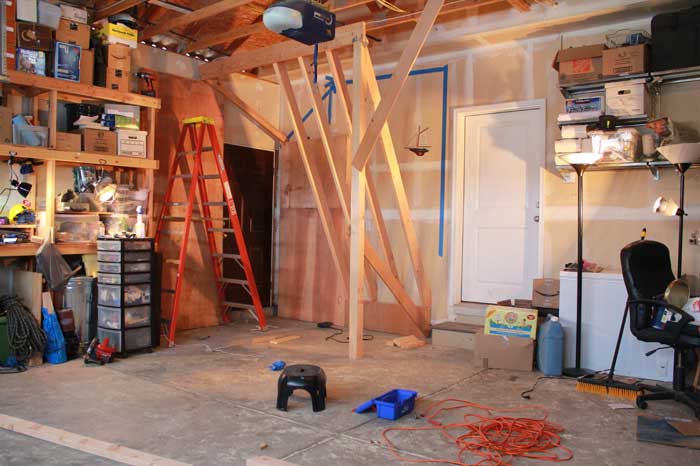
Be sure the pads extend out of your wall zone to ensure safe landing during swings and other rapid climbing moves. Drill the holes before attaching the T-nuts for better efficiency.Attach everything to the frames, and then bolt and properly clamp them down. If you attach your climbing wall onto an existing wall or surface in a room, attic, or basement, it’ll reduce the work. Covering a couple of electric outlets is fine, but avoid building on a wall with windows or doors. Ensure proper airflow and access to the room with the climbing wall.


No comments:
Post a Comment